
Welcome Redvo Insurance Solutions
Welcome Redvo Insurance Solutions
Call Us Now
+1800-411-0733
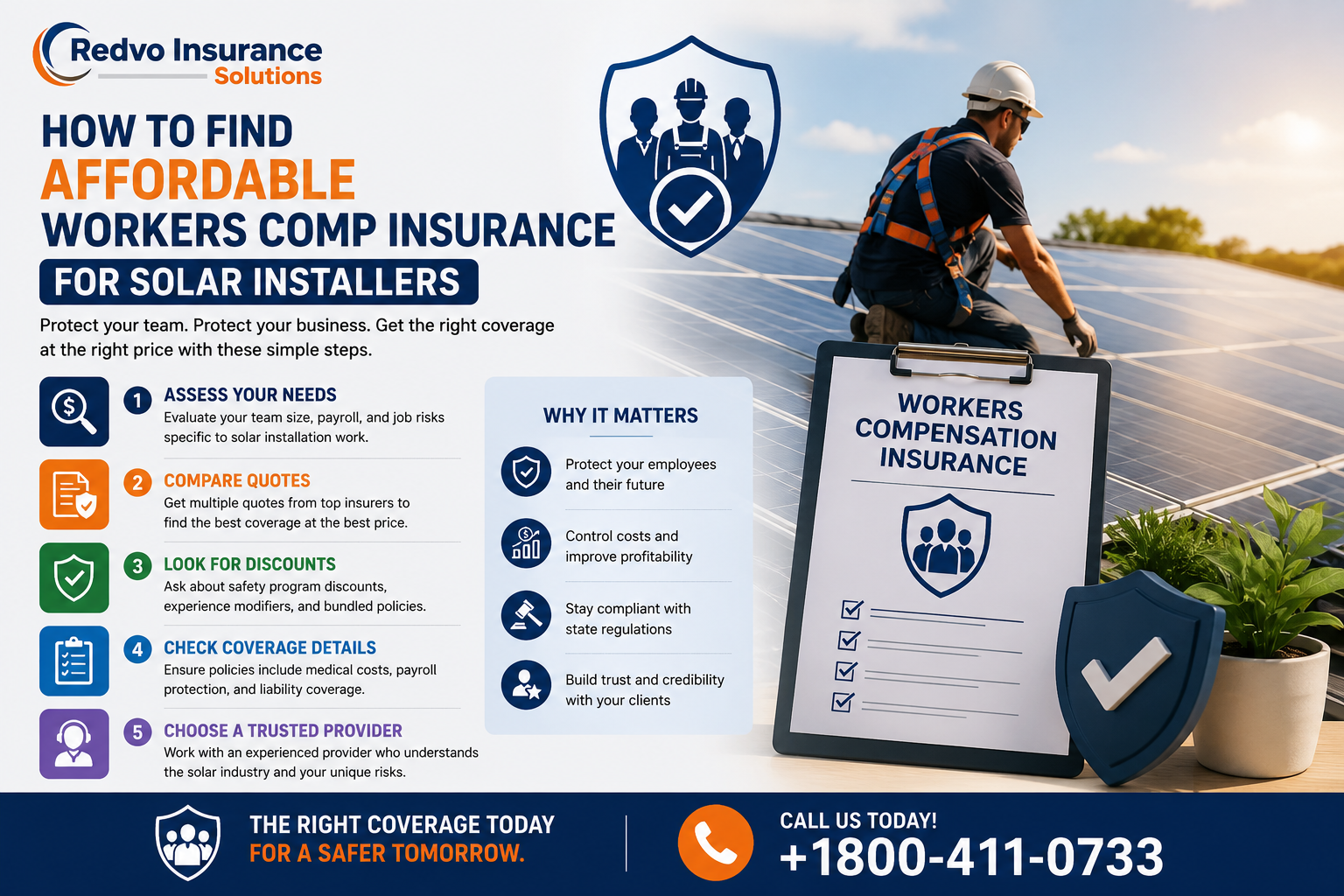
Solar installation involves roofing, electrical work, heavy equipment, ladders, and outdoor conditions. These activities create several risks for workers and employers. Solar workers may face falls, electric shock, arc flashes, burns, and extreme weather exposure. OSHA identifies these hazards across solar installation and maintenance activities
Workers compensation insurance helps protect eligible employees after covered work-related injuries or illnesses. It may also help businesses manage the financial impact of covered claims. However, finding affordable coverage requires more than choosing the lowest premium. Solar contractors should compare coverage, classifications, payroll, claims history, and policy terms.
Redvo Insurance Solutions has 15+ years of experience helping businesses understand their insurance needs. This experience can help solar contractors make better coverage decisions.
Workers compensation insurance protects eligible employees who suffer covered work-related injuries or illnesses. Depending on state law and policy terms, benefits may include medical treatment and wage replacement. Some claims may also qualify for rehabilitation or related benefits.
Many solar installation businesses need workers compensation insurance for their employees. However, the exact requirements depend on state law and business circumstances. Employee numbers can affect requirements in some states. Business structure and worker classification can also influence coverage obligations.
Subcontractor relationships may require additional review. A person called an independent contractor may not always qualify as one under state law.
Solar contractors should verify their requirements with the appropriate state workers compensation authority. The U.S. Department of Labor provides links to state workers compensation offices. Companies operating across multiple states should review each state's requirements separately. This approach helps contractors avoid relying on one rule for every location.
Failing to maintain required workers compensation coverage can create serious business problems. Possible consequences can include penalties, additional costs, coverage disputes, or problems with contracts.
Some customers may also require proof of workers compensation coverage before allowing contractors onto job sites. Solar contractors should maintain current insurance certificates and other required documentation.
Workers compensation can provide benefits for eligible work-related injuries and illnesses. The exact benefits depend on state law and the applicable insurance policy. Solar installers can experience many types of workplace injuries. These injuries may result from falls, electrical work, lifting, tools, equipment, or environmental conditions.
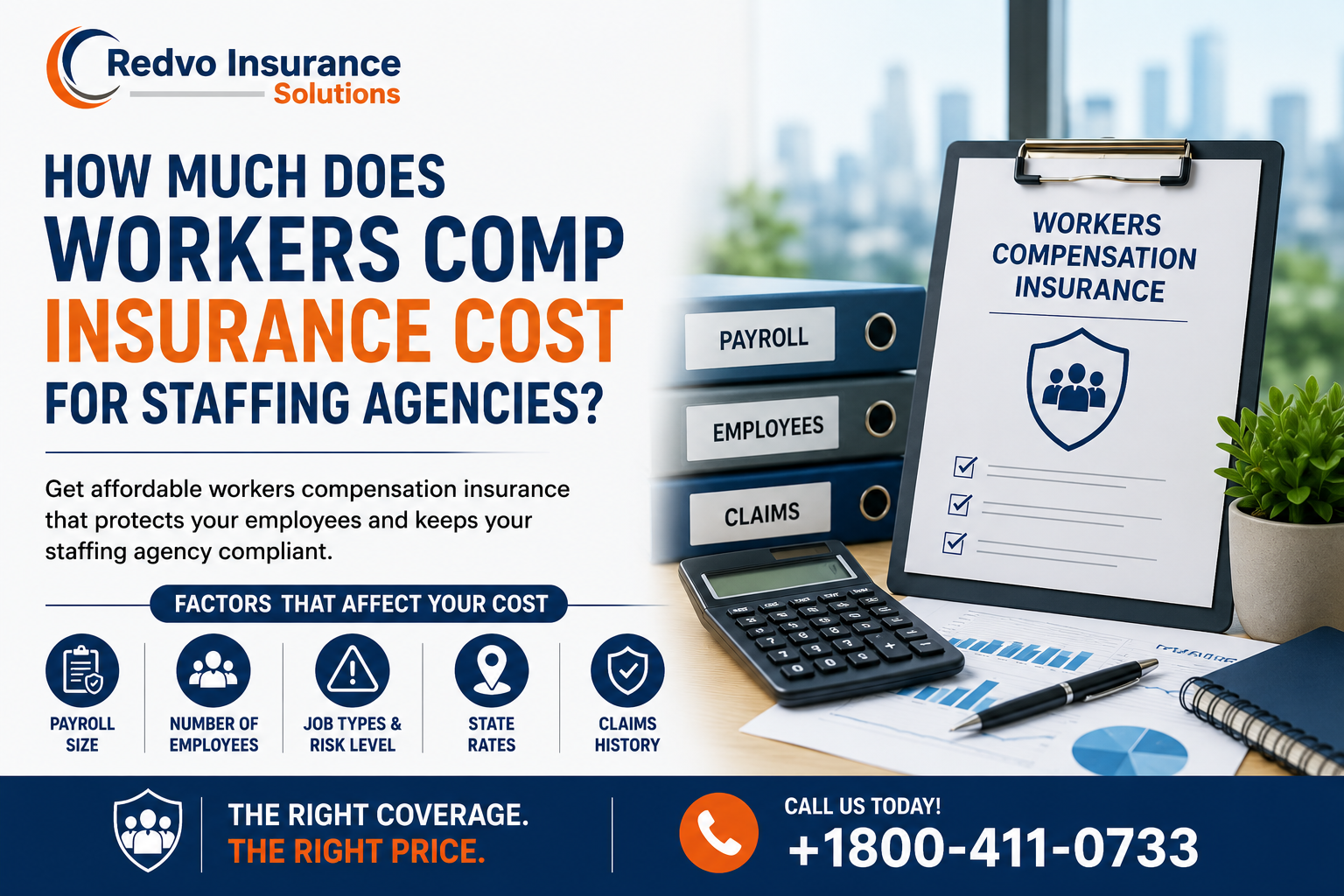
Finding affordable workers compensation coverage requires accurate business information. Insurance companies evaluate different factors before determining premiums. These factors can include payroll, employee classifications, location, claims history, and job duties.
The solar installer workers comp insurance cost can therefore vary significantly between businesses. A small residential installer may receive different pricing from a large commercial solar contractor. The best approach involves comparing suitable policies using the same business information.
There is no universal price for solar installer workers compensation insurance. The solar installer insurance cost depends on several business-specific factors.
Important pricing factors can include:
Annual payroll
Employee classifications
State and location
Claims history
Type of solar work
Business operations
Employee job duties
Insurance company underwriting
Previous policy history
Higher-risk operations may receive different pricing from lower-risk operations. For example, extensive rooftop work can create significant fall exposure. Electrical installation can also create additional workplace risks.
OSHA identifies electrical shock, arc flash, burns, and falls among solar industry hazards. Claims history can also influence how insurers evaluate a business. A strong safety record can help demonstrate responsible risk management.
Understanding pricing factors can help contractors manage insurance costs.
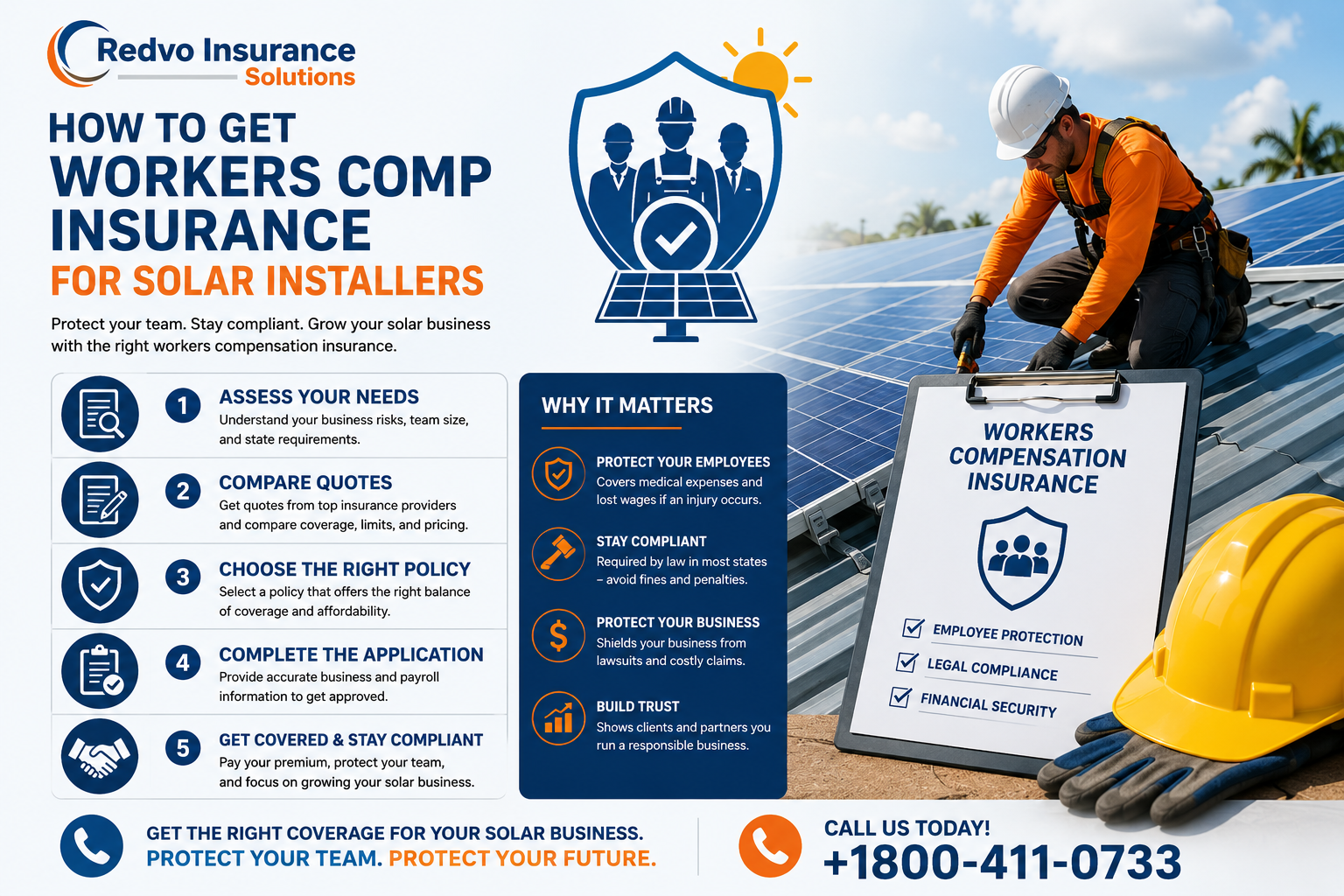
Getting a workers comp insurance quote for solar contractors starts with accurate business information. Prepare important details before contacting insurance providers.
You may need the following information:
Business name
Business location
Number of employees
Annual payroll
Employee job duties
Years in business
Previous claims
Subcontractor information
Current insurance details
Types of solar projects
Expected business activity
Providing complete information can help produce a more accurate quote. Explain whether your employees perform residential or commercial solar installation. Also explain whether employees perform electrical connections, repairs, maintenance, or rooftop work.
Comparing multiple quotes can help you understand available pricing. However, each quote should use similar business information. Otherwise, price differences may not provide a fair comparison. Do not choose coverage based only on premium.
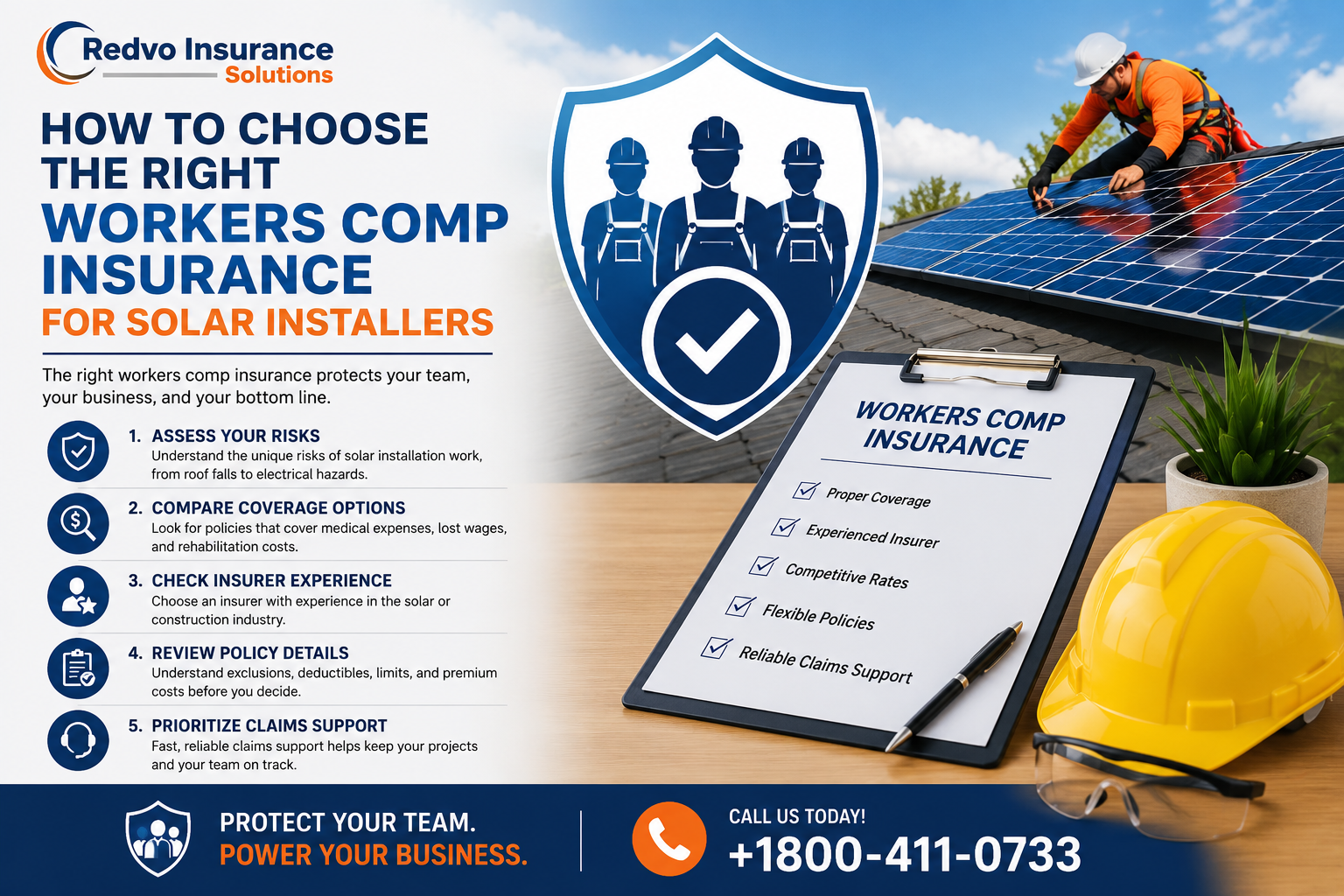
Comparing workers comp insurance for solar contractors requires a complete review. The cheapest policy may not always provide the best value. Start by checking whether the policy matches your actual operations.
Solar installers should look for coverage that matches their actual business activities. The policy should reflect employee duties, payroll, locations, and project types. Contractors should also confirm that coverage meets applicable state requirements. Look for an insurance provider that understands construction and solar risks.
Safety knowledge is equally important. OSHA states that solar workers can face fall hazards while working on roofs, ladders, and scaffolding.
Construction workers installing solar panels face specific fall protection requirements when exposed to qualifying fall distances. Electrical safety also requires serious attention. OSHA notes that solar workers can face electrocution and arc flash hazards.
Solar contractors should provide appropriate safety training and protective equipment. OSHA describes personal protective equipment as an important protection measure after stronger hazard controls.
A safety program should match the work employees perform. Training should address roof work, electrical hazards, ladders, tools, equipment, and emergency procedures.
Employees should understand how to identify workplace hazards before starting tasks. OSHA recommends identifying hazards before solar installation work begins.
Job conditions can change during installation. Therefore, workers should reassess hazards when site conditions change.
Solar contractors can take several practical steps to manage insurance costs.
First, maintain accurate payroll records.
Second, use correct employee classifications.
Third, improve workplace safety.
Fourth, reduce preventable workplace accidents.
Fifth, compare insurance options before renewal.
Sixth, review your policy whenever business operations change.
Seventh, maintain organized claims and safety records.
These actions can help contractors present accurate information during insurance reviews. However, contractors should never reduce essential safety measures simply to lower premiums. Safety should always remain the priority.
Affordable solar contractor insurance means coverage that provides suitable protection at a reasonable business cost.
The cheapest premium does not always represent the best value. A low-cost policy may become expensive if it does not properly match your business.
Solar contractors should evaluate the entire insurance package. Consider coverage, premium, classifications, exclusions, claims support, payment terms, and compliance needs. The goal should be appropriate protection with a manageable cost. This approach creates better long-term value than simply selecting the lowest quote.
Solar insurance requires an understanding of both business operations and workplace risks. An experienced insurance professional can help identify important information before submitting an application. They can also help contractors compare quotes more effectively.
Redvo Insurance Solutions brings 15+ years of experience to the insurance industry. That experience can help businesses evaluate their insurance requirements and available options.
Solar contractors should work with professionals who understand their operations. The right guidance can help reduce confusion during quoting, policy review, and renewal.
Finding affordable workers comp insurance for solar installers requires more than searching for the lowest premium.
Solar contractors should understand their risks, state requirements, employee classifications, payroll, claims history, and coverage needs. They should also compare multiple insurance options using accurate business information.
Solar installation involves serious workplace hazards. OSHA identifies falls, electrical hazards, burns, and heat stress among important solar industry risks. Strong safety procedures should therefore work alongside proper insurance coverage.
The best policy should match your actual employees, projects, and business operations. It should also provide appropriate protection while keeping costs manageable.
Redvo Insurance Solutions has 15+ years of experience helping businesses understand their insurance options. With trusted guidance, solar contractors can make more informed decisions about their workers compensation coverage.
The goal is not simply cheap workers comp insurance for solar installers. The real goal is reliable and affordable protection that supports your employees and your solar business.
Solar installer workers comp insurance cost varies by payroll, employee classifications, location, claims history, and solar work performed.
Many solar businesses need workers compensation coverage for employees. Requirements vary by state, employee count, business structure, and worker classification.
Payroll, employee classifications, location, claims history, job duties, and business operations can affect solar installer insurance cost.
Workers compensation may cover eligible medical treatment, wage replacement, rehabilitation, and other benefits after covered work-related injuries or illnesses.
Solar installers can compare quotes, maintain accurate records, use correct classifications, improve safety, and work with experienced insurance professionals.
Provide employee numbers, payroll, job duties, locations, claims history, subcontractor information, and project details to request an appropriate insurance quote.
Workers compensation may cover eligible work-related roof injuries. Coverage depends on state requirements, policy terms, and individual claim circumstances.
Subcontractor coverage depends on state law, worker classification, contract terms, and the actual working relationship.
Solar contractors may need workers compensation, general liability, commercial auto, equipment coverage, and other policies based on their operations.
Solar contractors can manage costs through safety training, accurate classifications, payroll records, accident prevention, policy reviews, and competitive insurance quotes.









It is a long established fact that wo will be distracted by the readable content as when looking at its layout.
© 2026 Redvo Insurance Solutions All rights reserved