
Welcome Redvo Insurance Solutions
Welcome Redvo Insurance Solutions
Call Us Now
+1800-411-0733
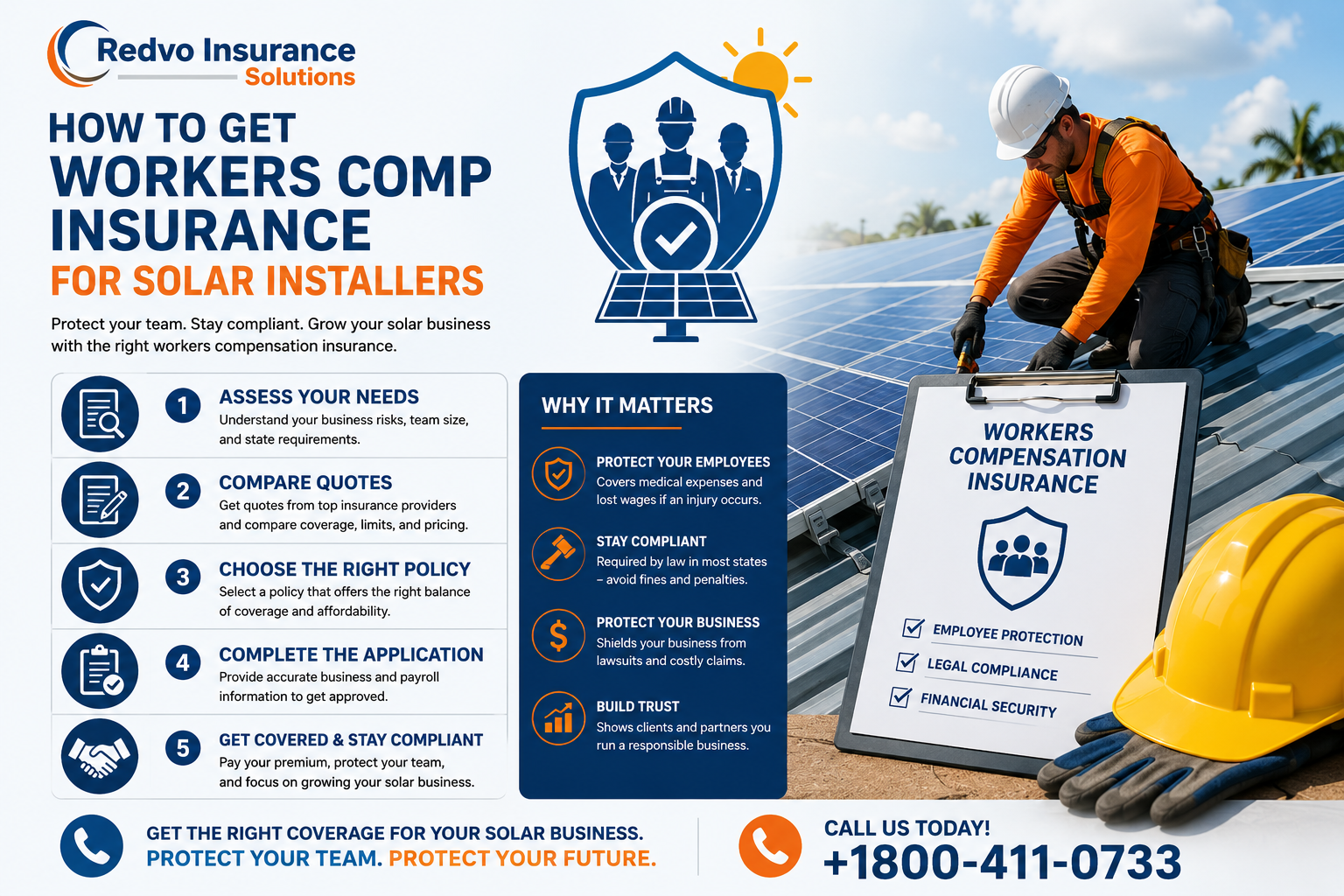
Solar installation is a growing industry with many workplace risks. Workers may climb roofs, handle electrical systems, lift heavy panels, and use power tools.
These tasks can lead to falls, electrical injuries, burns, strains, and other workplace accidents. Workers compensation insurance helps protect eligible employees after covered work-related injuries.
Getting the right policy requires more than choosing the lowest price. Solar contractors need accurate payroll, correct worker classifications, and coverage that matches their actual work.
State laws also differ, so requirements depend on where your employees work. This guide explains how to get workers comp insurance for solar installers, what it can cover, what it may cost, and how to find suitable coverage.
Redvo Insurance Solutions has 15+ years of experience helping businesses understand workers compensation insurance options. Our trusted approach focuses on accurate information, practical guidance, and coverage suited to each business.
Yes, many solar installation businesses with employees need workers compensation insurance. Exact requirements depend on state law, employee status, business structure, and workforce size.
Workers compensation requirements depend on the state where employees perform their work. Employee numbers can affect whether coverage becomes mandatory. Business structure and worker classification can also affect requirements. Construction companies may face specific workers compensation rules.
For example, California has specific workers compensation requirements for contractors. The California Contractors State License Board provides requirements for maintaining workers compensation coverage when applicable.
Texas follows a different system. Most private employers can choose whether to carry workers compensation coverage, although exceptions and legal consequences apply. This difference shows why solar businesses should check their own state's requirements.
Workers compensation generally provides benefits for covered work-related injuries and illnesses. These benefits can include medical treatment and wage replacement. Disability benefits may also apply under state law. Fatal workplace accidents may qualify for death benefits for eligible dependents.
For solar installers, common workplace injuries can include:
Rooftop falls
Ladder accidents
Electrical shocks
Arc flash injuries
Burns
Cuts
Muscle strains
Lifting injuries
Repetitive motion injuries
Heat-related illness
OSHA identifies falls as a major hazard during solar installation work. Employers must use appropriate fall protection when workers face covered fall hazards.
Electrical hazards also require strong safety controls. Solar workers can face electric shock, electrocution, burns, and arc flash exposure.
Workers compensation insurance does not replace safety procedures. Solar businesses should use insurance and safety programs together.
Before applying for solar installer workers compensation insurance, prepare accurate business information.
Start with your legal business name and business structure. Provide the locations where employees perform work. You should also prepare complete employee information.
List each employee's job duties and estimated annual payroll. Separate office workers from field workers when appropriate. Explain the type of solar work your company performs.
Tell the insurer whether your crews perform:
Residential solar installation
Commercial solar installation
Rooftop solar installation
Ground-mounted solar installation
Solar electrical work
Battery storage installation
Solar maintenance
Solar repair
Panel replacement
Equipment installation
Previous workers compensation claims may also affect underwriting and pricing. Provide accurate claims information when requested. Incorrect information can create problems during audits or claims.
Prepare these details before requesting a quote:
Legal business name
Business address
States of operation
Number of employees
Estimated annual payroll
Employee job duties
Type of solar projects
Previous claims
Current insurance information
Subcontractor information
Business licenses when applicable
Accurate information helps insurers understand the actual risk of your business.
Step 1: Check Your State Requirements
First, check the workers compensation requirements in every state where your employees work. Do not rely on another contractor's requirements. Workers compensation laws vary across the United States.
Step 2: Identify Every Type of Worker
Create a complete employee list. Separate solar installers, electricians, laborers, supervisors, and office employees. Correct worker classification helps insurers calculate appropriate premiums.
Step 3: Calculate Your Payroll
Prepare your expected payroll for the policy period. Never intentionally reduce payroll to obtain a cheaper initial premium. Workers compensation policies may involve payroll audits. Incorrect payroll reporting can lead to additional premium charges.
Step 4: Describe Your Solar Operations
Explain exactly what your employees do. Mention rooftop installation, electrical work, battery installation, maintenance, and repair services. Clear information helps insurers understand your business exposure.
Step 5: Request Multiple Quotes
Request quotes from suitable insurance providers or brokers. Give each provider the same accurate business information. This creates a better basis for comparing available options.
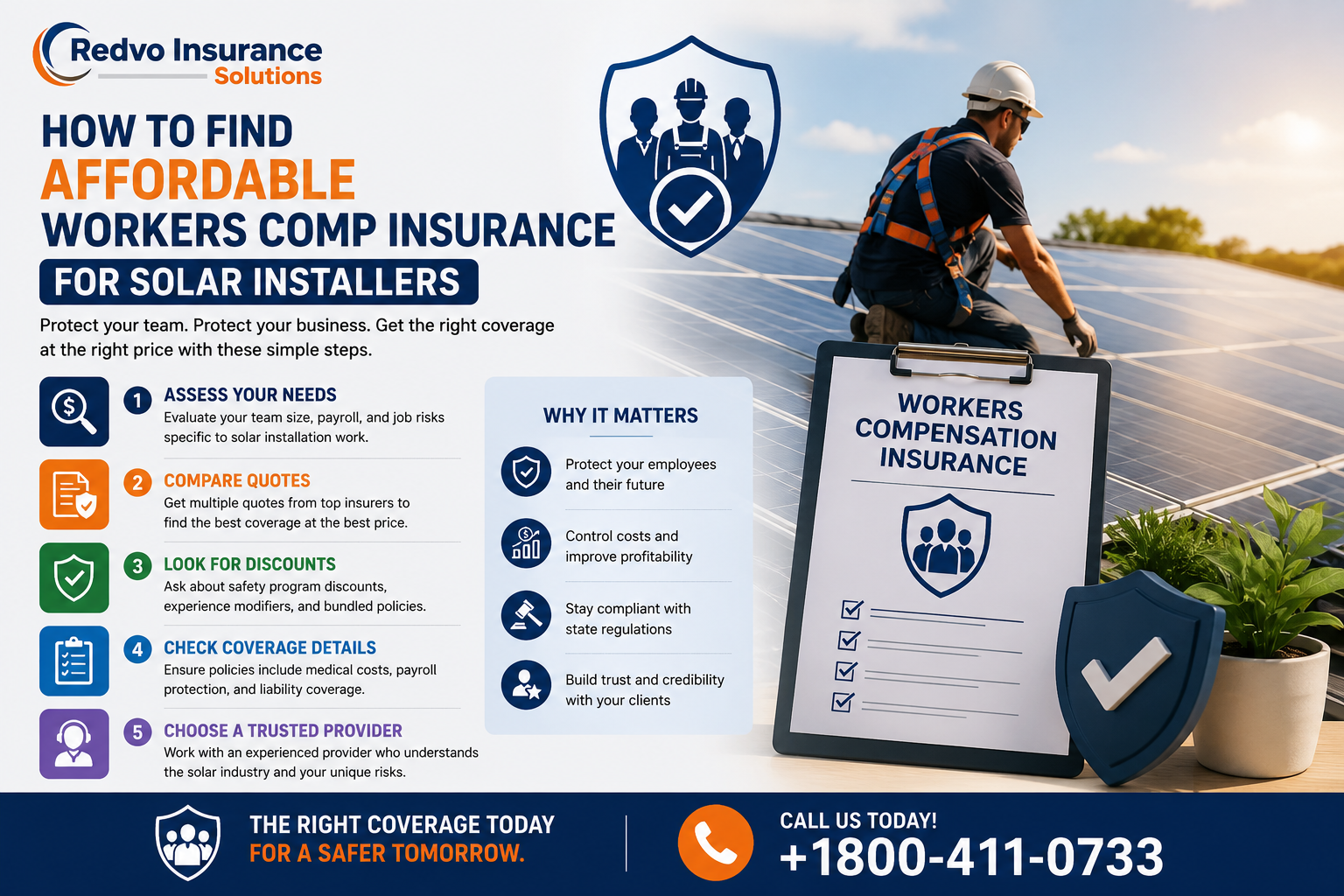
Step 6: Compare Coverage and Pricing
Do not choose the cheapest quote automatically. Compare the insurance carrier, classifications, policy terms, payment options, claims service, and applicable requirements.
Step 7: Review the Policy
Check the policy before purchasing coverage. Verify the business name, locations, employee classifications, payroll, effective date, and other important details.
Step 8: Keep Your Policy Updated
Tell your insurer about significant business changes. Changes in payroll, employees, locations, or business operations can affect your policy. Review your coverage during every renewal.
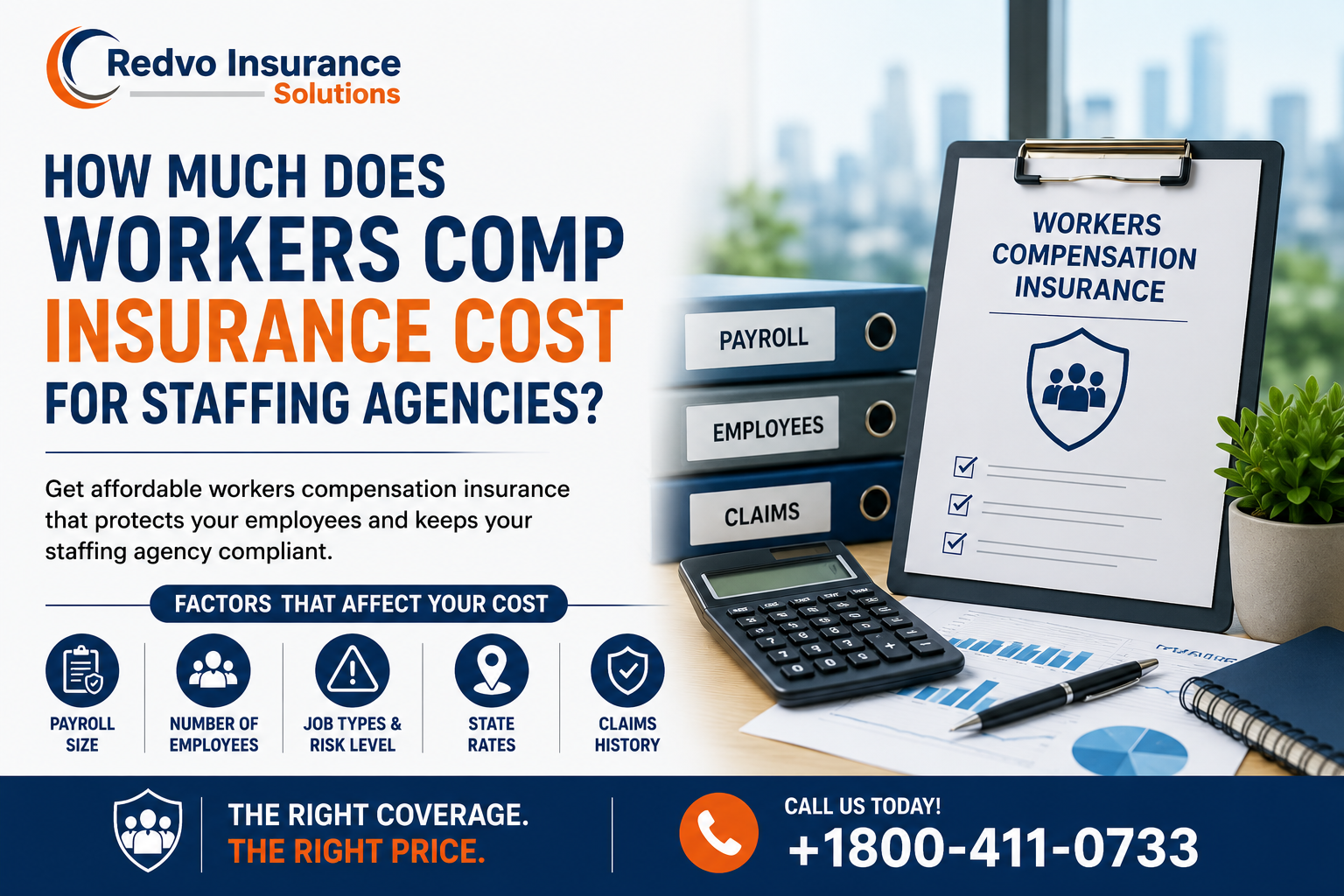
Workers comp insurance cost for solar installers varies by payroll, employee classification, state, claims history, and business operations.
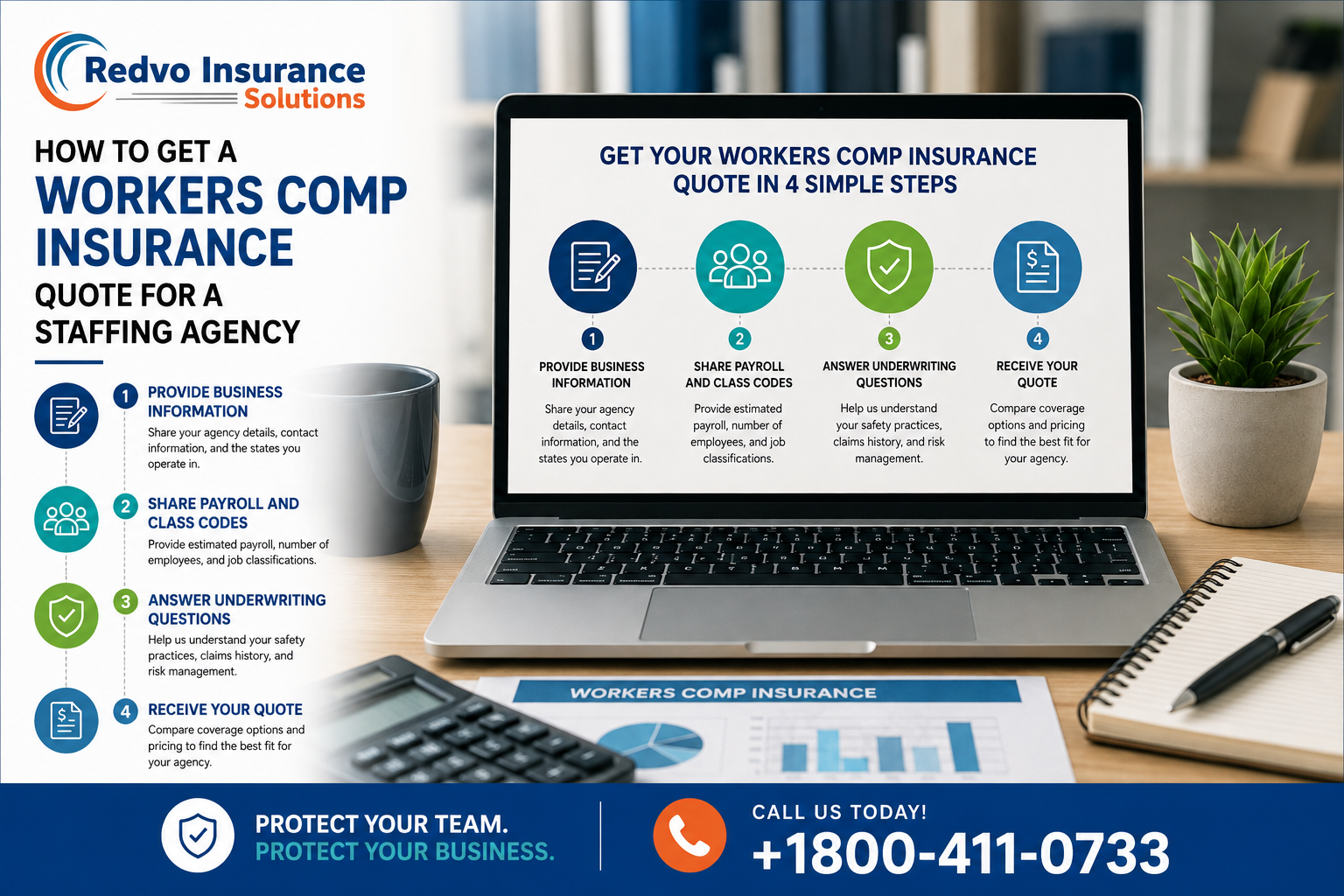
Getting a workers comp insurance for solar installers quote becomes easier when your business information is organized.
Start with your legal business details and employee information.
Then provide your estimated payroll.
Explain your solar services clearly.
Do not simply describe your business as a contractor. Explain that your employees install solar systems and describe their actual duties.
Tell the insurer about rooftop work and electrical activities.
Also disclose battery storage and other related services.
Provide previous workers compensation policy and claims information when requested.
A quote should reflect your real business operations. A very low quote based on incorrect information can create problems later.
Price should not be your only consideration.
Compare:
Insurance carrier
Employee classifications
Estimated payroll
Policy effective date
Payment options
Claims service
Policy conditions
State requirements
Audit provisions
Certificate requirements
Two quotes may look similar while having different assumptions. Always understand what each quote actually covers before purchasing.
Affordable solar installer workers compensation insurance starts with good risk management and accurate business information.
The first priority should always be worker safety. Create a written safety program for field employees. Train workers before assigning them to high-risk tasks.
Workers compensation and general liability protect against different risks. Workers compensation generally addresses covered employee work injuries. General liability generally addresses certain third-party bodily injury and property damage claims. For example, an employee suffering a covered workplace injury may fall under workers compensation.
A customer whose property becomes damaged during a solar project may involve general liability. Solar contractors may need several insurance policies because their risks extend beyond employee injuries. A business should review its complete insurance program instead of relying on one policy.
A subcontractor's insurance status depends on worker classification, state law, contracts, and policy terms. Solar companies should verify subcontractor insurance when appropriate. Request a valid certificate of insurance when required. Review the subcontractor agreement before work begins.
Do not assume that calling someone an independent contractor automatically makes them one. Worker classification rules can vary between jurisdictions. Businesses should seek professional advice when contractor status remains unclear.
Workers compensation protects against a specific category of employee injury risks. Solar businesses may need additional insurance for other exposures. Depending on their operations, contractors may consider:
General liability insurance
Commercial auto insurance
Tools and equipment coverage
Inland marine insurance
Professional liability insurance
Umbrella liability insurance
Equipment coverage
The right insurance mix depends on your business services and risks. Solar contractors should review their complete insurance program instead of focusing only on workers compensation.
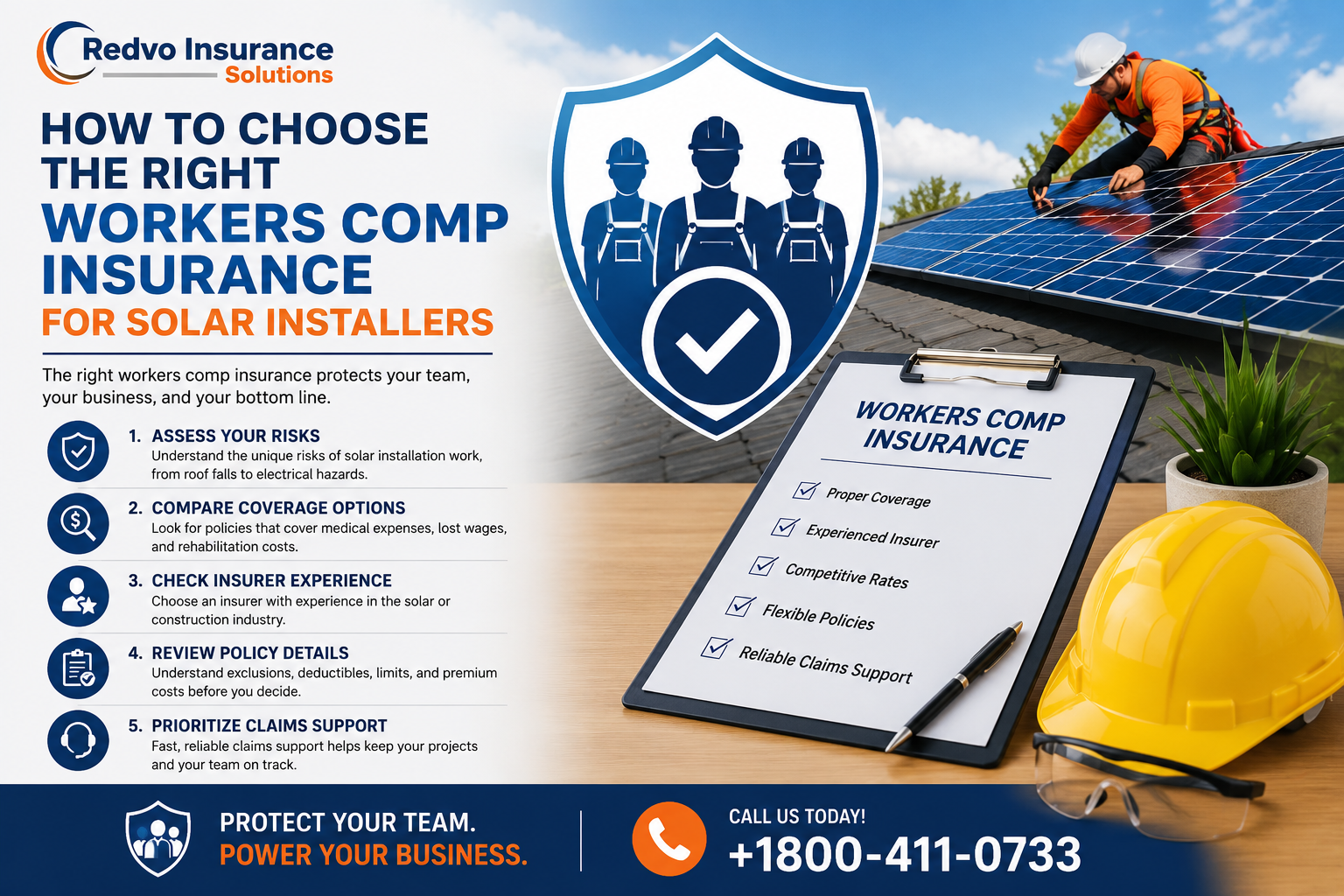
Getting workers comp insurance for solar installers starts with understanding your state requirements, employee duties, payroll, and workplace risks. Solar contractors should provide accurate information when requesting quotes. They should compare policy terms instead of choosing insurance based only on price.
Rooftop falls and electrical hazards make strong safety practices especially important for solar installation companies. Correct worker classifications and accurate payroll can also support a smoother insurance process.
Redvo Insurance Solutions has 15+ years of experience helping businesses navigate workers compensation insurance. Our trusted approach focuses on understanding your operations before discussing suitable insurance options. The right policy should match your workforce, locations, duties, and business risks.
Many solar businesses with employees need workers compensation insurance. Requirements vary by state, employee count, worker status, and business structure.
Costs vary based on payroll, employee classifications, state, claims history, experience rating, and the solar work performed.
Workers compensation may provide medical care, wage replacement, disability benefits, and death benefits for eligible covered workplace injuries.
Provide business details, employee duties, payroll, work locations, claims history, and a clear description of your solar operations.
Some providers offer online applications. Complex solar operations may require additional information before receiving a final policy offer.
A work-related rooftop injury may qualify for workers compensation when it meets applicable state requirements and policy conditions.
Subcontractors are not automatically covered. Coverage depends on worker classification, state law, contracts, and policy terms.
Solar installers can control risks, prevent claims, maintain accurate classifications, review payroll, improve safety, and compare suitable quotes.
Insurers may request employee numbers, payroll, job duties, locations, solar services, claims history, subcontractor details, and existing insurance information.
The best policy depends on your state, payroll, employee duties, claims history, operations, and coverage needs. Compare suitable policies before choosing one.







It is a long established fact that wo will be distracted by the readable content as when looking at its layout.
© 2026 Redvo Insurance Solutions All rights reserved